
Kathmandu Valley
Stays in Boudhanath (Boudha)
Stays beside the Boudhanath Stupa — Tibetan-Nepalese Buddhist heart of the valley, monasteries on every block.
Why Boudhanath
Boudhanath, locally Boudha, is built around one of the largest stupas in the world — a 36-metre mandala of white domes and golden spires that has been continuously circumambulated since at least the 5th century. The pedestrian ring around the stupa hosts Tibetan refugee communities, monastic schools, thangka workshops and one of Kathmandu's best concentrations of Tibetan and Bhutanese restaurants. Stays here are calmer than Thamel and tightly oriented around the rhythm of monastic life — chants from neighbouring gompas at dawn and dusk, butter-lamp glow at evening kora. Direct-booked apartments inside the inner ring offer stupa-view balconies; quieter and cheaper options are 5 minutes' walk out.
- Direct stupa views from inner-ring apartments
- Tibetan Buddhist monastic and refugee community
- 15-20 min taxi to Tribhuvan International Airport (closest heritage core)
- 10 min by taxi to Pashupatinath Temple
- Best base for Buddhist study, retreats and meditation
Apartments
Available Apartments Nearby
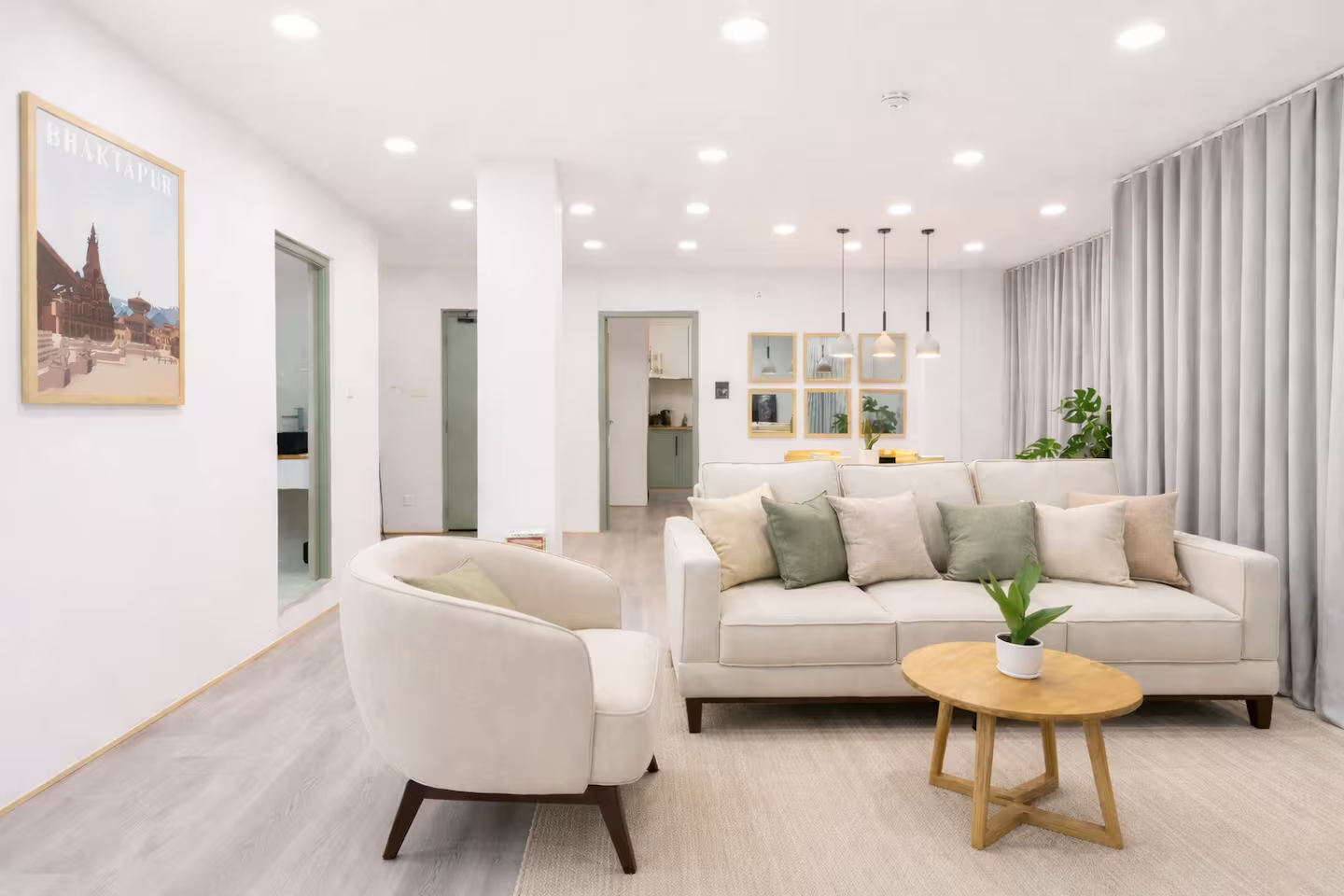
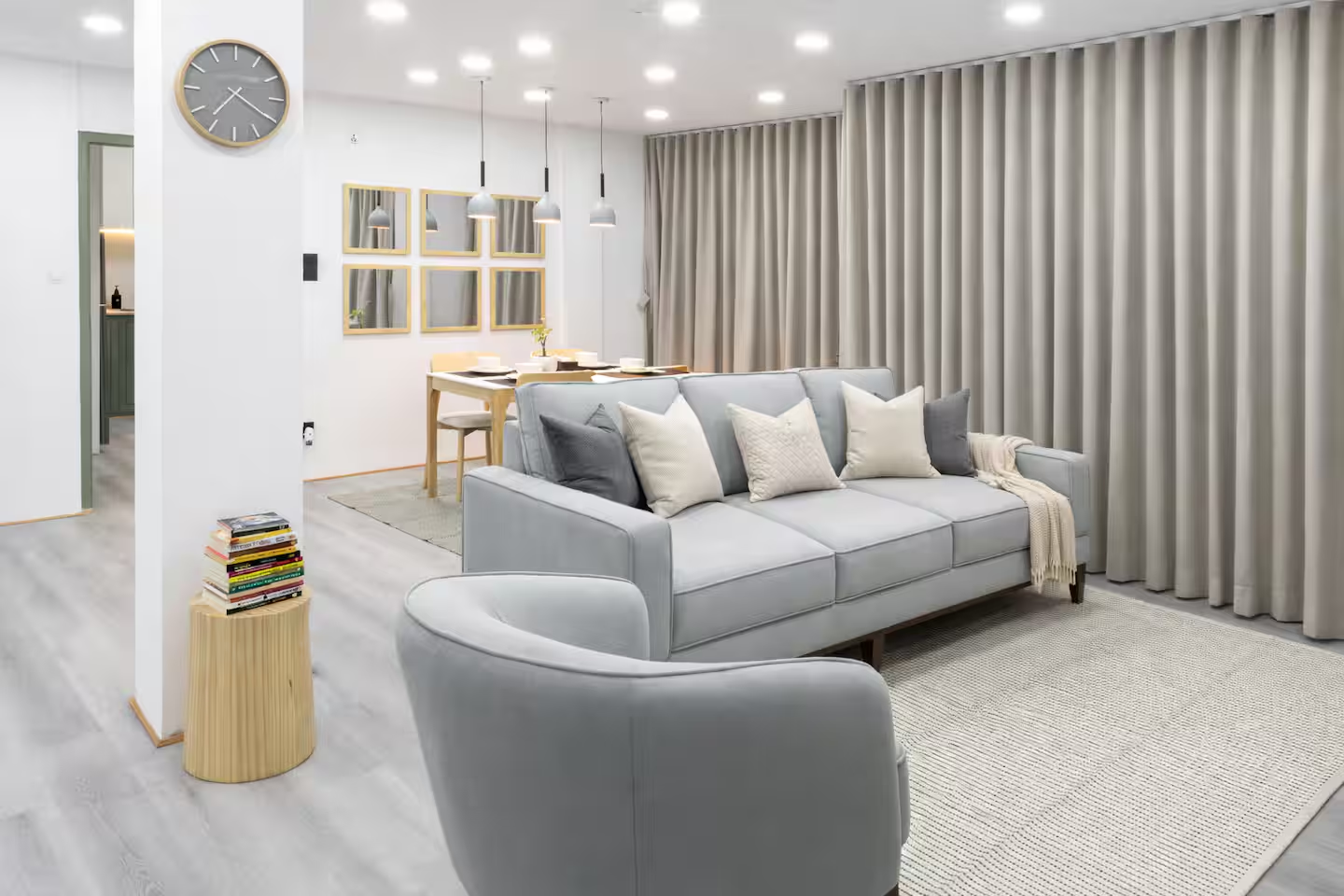
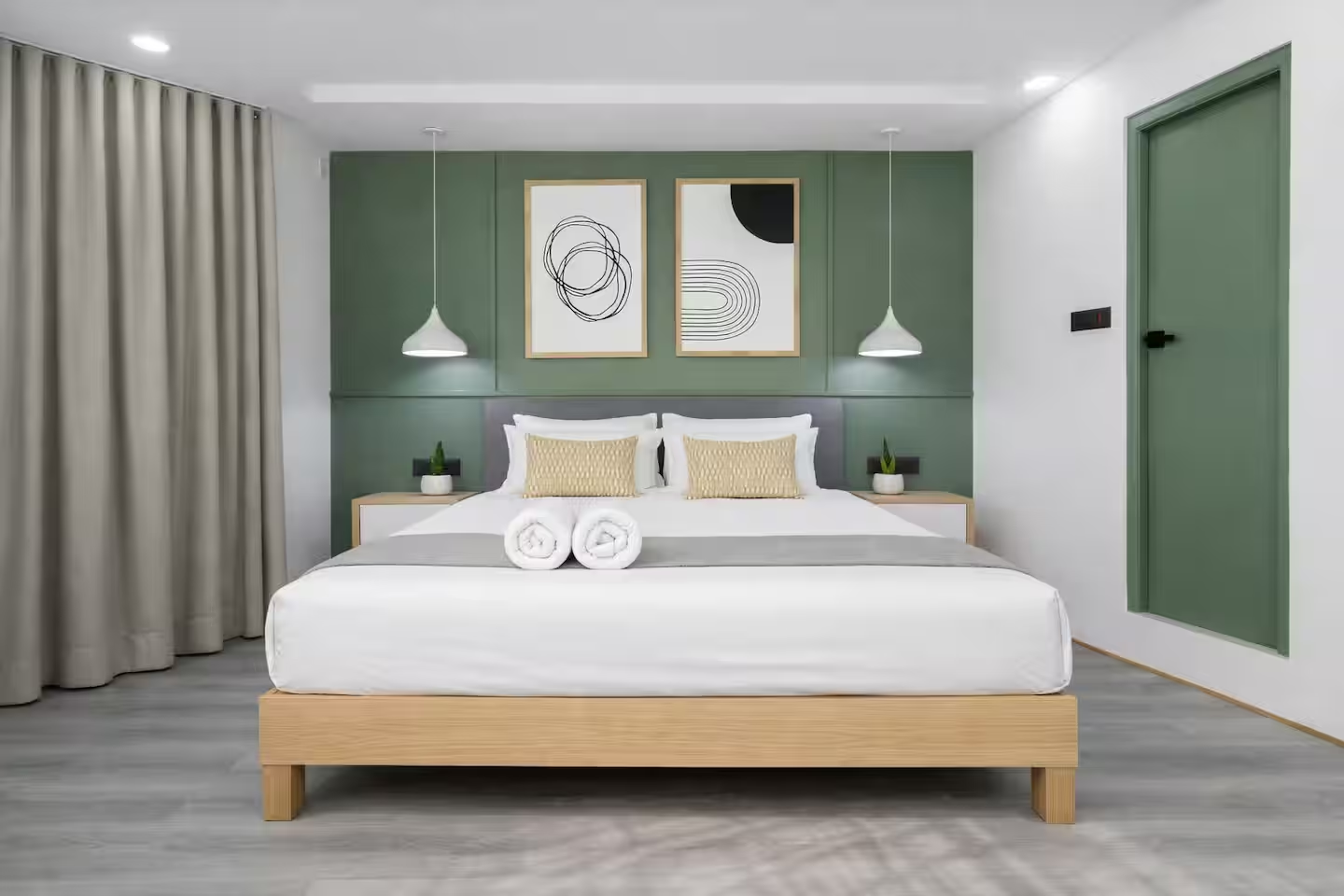
The Boudhanath Guide
Boudhanath in one line: the Tibetan Buddhist heart of the Kathmandu Valley, built around a 36-metre stupa that has been continuously circumambulated for fifteen centuries.
Boudhanath (Boudha to locals) is a UNESCO World Heritage site and the largest Tibetan settlement outside Tibet itself. After the 1959 Chinese annexation of Tibet, a substantial refugee community settled here around the stupa; today the pedestrian ring hosts more than fifty monasteries (gompas), Tibetan-language schools, thangka workshops, monastic colleges and one of South Asia's most concentrated Tibetan-Buddhist study communities. Rangjung Yeshe Institute — affiliated with Kathmandu University — runs Tibetan language and Buddhist studies courses that bring foreign students for semester-long stays, which is why long-term apartment supply here is unusually deep.
The stupa and the kora. The central stupa is a giant mandala — concentric platforms, hemisphere dome, harmika, golden spire and umbrella. The painted eyes of the Buddha on the four sides of the harmika are arguably the most photographed symbol in Nepal. *Kora* — clockwise circumambulation — happens around the clock but the two big windows are sunrise (5:30–7:00am, mostly locals + monks) and sunset (5:00–7:00pm, butter-lamp lighting + tourists). The full circuit is 350m. Inner-ring apartments with stupa-view balconies are the most photographed stays in Kathmandu.
Major monasteries within walking distance. Shechen Tennyi Dargyeling (Nyingma — the seat in exile of Dilgo Khyentse Rinpoche's tradition); Ka-Nying Shedrub Ling (Kagyu); Pal Dilyak (Drikung Kagyu); Khachoe Ghakyil Ling (Gelug nuns' monastery); and Shree Phulang Mandala. All open their main shrine rooms to respectful visitors outside teaching hours.
Food and shopping. The best Tibetan and Bhutanese restaurants in the city sit on or near the kora — Stupa View Restaurant, Garden Kitchen, Saturday Cafe Boudha. For thangka, statues, ritual items and Tibetan textiles, the inner-ring shops are competitive with anything in the city. Avoid changing money at the airport or hotels — the Boudha-strip exchange shops post real rates.
Practical. The Boudha ring is car-free; taxis and Pathao drop off at the four gates. Power cuts (load-shedding) happen here more often than in central Kathmandu — bring a power bank or pick an apartment with inverter backup. Boudhanath is the closest of the three heritage cores to the airport (15–20 minutes), which makes it the practical choice for late arrivals or early flights.
Festival calendar. Tibetan New Year (Losar, late January / February) and the autumn festival window (October-November — Lhabab Düchen, Mönlam) are the two peak periods. Stupa-view apartments book out 3-4 months in advance for those weeks. The rainy summer months are calmest.
Distances You'll Actually Want
- Boudhanath Stupa (kora ring)0 m0 mininner-ring apartments
- Shechen Monastery400 m5 min
- Ka-Nying Shedrub Ling Monastery350 m5 min
- Pashupatinath Temple2.8 km10 min
- Tribhuvan International Airport (KTM)3.8 km15 min20-25 min in rush hour
- Thamel6.8 km25 min
- Lazimpat5.8 km18 min
- Kathmandu Durbar Square7.5 km30 min
- Patan Durbar Square9.0 km35 min
Best for Buddhist practitioners
If you're here for teachings, retreats or a semester at Rangjung Yeshe Institute, inner-ring apartments put you on the kora — five minutes' walk to morning circumambulation, ten to most major monasteries. Long-stay rates work well for 1–6 month student visas.
Best for late-arrival / early-departure travellers
Boudhanath is the closest heritage core to Tribhuvan International Airport — 15-20 minutes by taxi versus 25-30 from Thamel. For a single night between flights it's the more interesting layover than the airport hotels, and self check-in works any hour.
Best for Tibetan-culture travellers
Nowhere else in Nepal — and arguably outside Tibet itself — has this concentration of monasteries, refugee community, thangka workshops and Tibetan / Bhutanese cuisine within a single walkable ring. A 3-4 night Boudhanath stay paired with a Thamel base for the rest of a Kathmandu week is the classic itinerary.
Nearby Landmarks
- Boudhanath Stupa (UNESCO)
- Shechen Monastery
- Ka-Nying Shedrub Ling Monastery
- Pal Dilyak Monastery
- Khachoe Ghakyil Ling Nunnery
- Rangjung Yeshe Institute
- Stupa View Restaurant
Who Stays Here
Buddhist practitioners, retreatants, Tibetan-culture travellers, airport-proximity stays
FAQ
Frequently Asked
Can I do kora (circumambulation) without staying inside the ring?▾
When is Boudhanath busiest?▾
How far is Boudhanath from the airport?▾
Are there meditation retreats I can join?▾
Is there an entry fee for Boudhanath?▾
What about ATMs and groceries?▾
Will the morning chanting wake me up?▾
Nearby Neighbourhoods in Kathmandu
- ThamelShort-stay apartments in central Thamel — cafés, trekking outfitters and Garden of Dreams on the doorstep.
- LazimpatEmbassy-corridor serviced apartments in Lazimpat — quieter than Thamel, closer to the diplomatic missions and CIWEC clinic.
- Putalisadak (New Plaza)Putalisadak (New Plaza) — Tiny Living's home base. Five minutes walk to Durbar Marg cafés, twelve to Thamel, quiet enough at night to actually sleep.
Or Look Further Afield
Ready to Book in Boudhanath?
Browse every available apartment on the all apartments page, or read the full Booking Process walkthrough.